The Importance of Routine in a Child’s Early Years
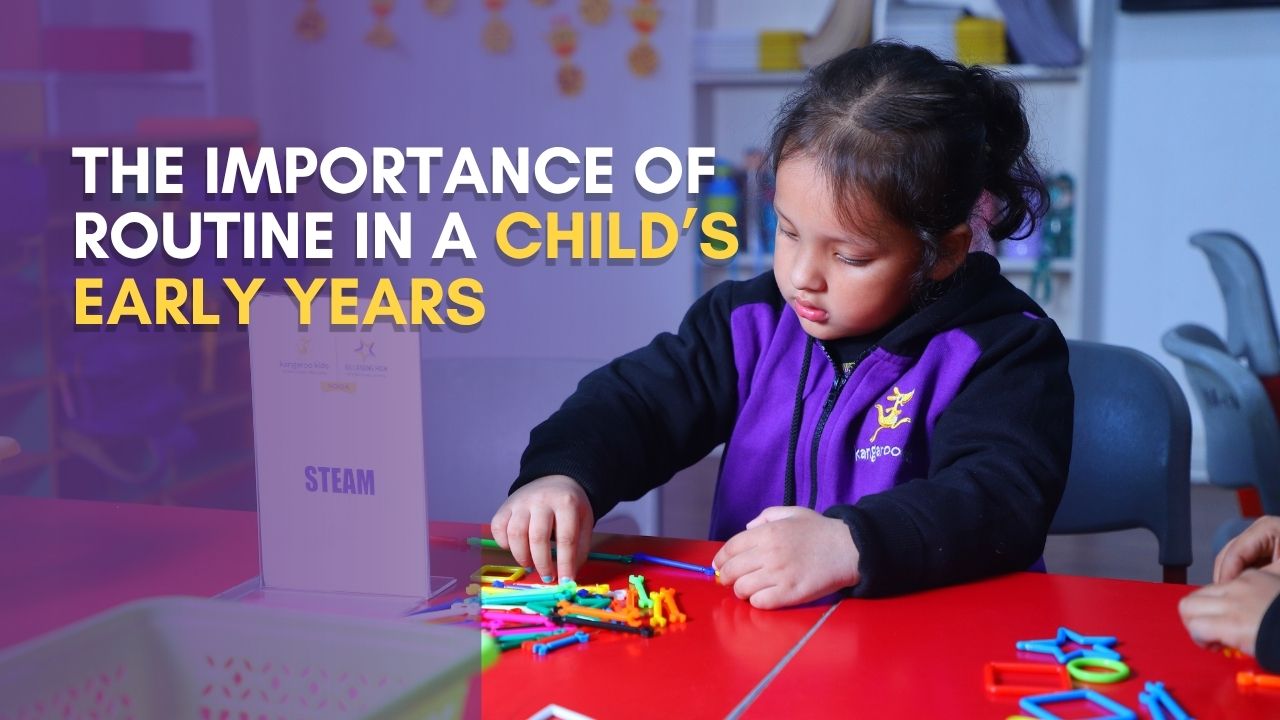
In the early years of life, children are constantly learning about themselves, their environment, and the people around them. During this crucial stage of development, one powerful yet often overlooked factor plays a major role in shaping their growth: routine. A consistent daily routine provides children with a sense of security, stability, and confidence that supports their emotional, social, and cognitive development. At Kangaroo Kids Playschool, structured routines are thoughtfully designed to create a balanced and nurturing environment where children can thrive.
Routine Creates a Sense of Security
Young children feel safest when they know what to expect. Predictability reduces anxiety and helps them feel in control of their surroundings. When children follow a regular schedule wake-up time, playtime, snack time, learning sessions, and rest they develop a sense of stability. This consistency helps them transition smoothly between activities and reduces behavioral challenges caused by uncertainty.
Encourages Emotional Stability
A well-established routine supports emotional regulation. When children know what comes next, they are less likely to feel overwhelmed or frustrated. Structured daily patterns teach them patience and help them manage expectations. Over time, children begin to understand boundaries and develop self-discipline, which strengthens their emotional resilience.
Builds Independence and Responsibility
Routine encourages children to take small responsibilities. Simple habits like cleaning up toys after play, lining up before class, washing hands before meals, or organizing their bags foster independence. In a structured environment like Kangaroo Kids, children learn to follow schedules confidently. These small achievements boost their self-esteem and create a sense of accomplishment.
Supports Learning and Cognitive Growth
Consistency enhances focus and learning. When academic and play activities are scheduled regularly, children’s brains adapt to learning patterns. They become mentally prepared for specific activities at certain times of the day. For example, morning circle time, storytelling sessions, creative activities, and outdoor play—all planned systematically help children understand time concepts and improve concentration. Routine also strengthens memory as repetition reinforces learning.
Improves Social Development
Group routines encourage cooperation and teamwork. When children participate in collective activities like snack breaks, group games, and classroom transitions, they learn to wait their turn, respect rules, and adapt to group settings. These shared experiences build social awareness and strengthen peer relationships.
Promotes Healthy Habits
Consistency benefits not only children but also parents. When children follow a predictable routine at playschool, it becomes easier to maintain structure at home. Smooth mornings, improved bedtime habits, and better cooperation make daily life less stressful for families.
Preparing for Formal Schooling
Routine in early years prepares children for structured school environments. They become comfortable following instructions, adapting to schedules, and completing tasks within a time frame. This early exposure builds discipline, time management skills, and confidence key qualities needed for long-term academic success.
Conclusion
Routine is more than just a timetable it is the foundation for emotional security, independence, learning, and social development. In the early years, structure provides the stability children need to explore the world confidently. At Kangaroo Kids Playschool, carefully planned routines create a balanced environment where children feel safe, supported, and ready to grow every day.


Kangaroo Kids International Preschool Noida is shaping learners with 21st Century Skills, fostering confidence, creativity, and a lifelong eagerness to learn. Our pioneering program redefines early education, integrating breakthrough brain research to nurture young minds for a dynamic world. Experience an innovative approach that empowers children to thrive!
Location
Gate No 1, A-73, Block A Sector-34, Noida-201301 (UP)
Contact Us
0120-4233128 / 129, 9990906386
admission@kangarookidsnoida.com
Quick Link
Cities with our Presence

Follow Us


